> For the complete documentation index, see [llms.txt](https://doc.engenius.ai/llms.txt). Markdown versions of documentation pages are available by appending `.md` to page URLs; this page is available as [Markdown](https://doc.engenius.ai/home-engenius-qsg-library/engenius-cloud-qsg/cloud-pdu/ecp212-int.md).
# ECP212-INT
Cloud Managed 2U 10A Smart PDU with 12 Metered Outlets (ECP212-INT)
## Introduction
This Quick Start Guide is designed to guide you through installing the **PDU 12P 10A 200-240V**, model **ECP212-INT**, including hardware mounting and configuration.
{% hint style="info" %} **PDU 12P 10A 200-240V**
**Cloud Managed 2U 10A Smart PDU with 12 Metered Outlets**
#### **Model:** ECP212-INT
Function
• Real-time power consumption monitoring and alarming per outlet
• Remote switching per outlet
• 1.3 inches display for visualizing power information
• Attempt to reconnect from internet outages automatically
• Local and cloud management with analytic reports
• Bracket ears provide different angle installation
Safety
• 12A circuit breaker from overloading protection
• Fireproof MOV and grounded protection
• UL 62368-1, CE, RCM
Integration
• RESTFUL API supported
• SNMP v1 2c 3 supported
{% endhint %}
Content Quick Links
[**Hardware Overview**](#hardware-overview)
[**Hardware Installation**](#hardware-installation)
[**Management Plane**](#management-plane)
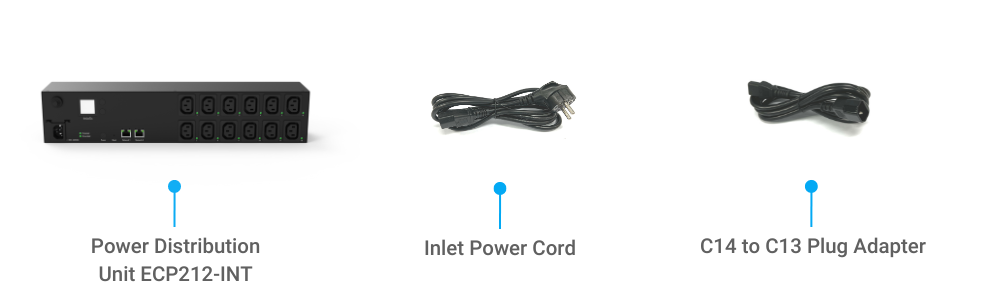
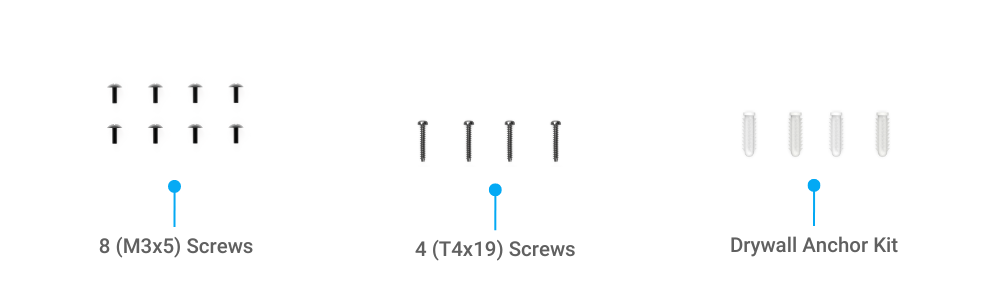
## Package Contents
## System Requirements
### **Web Browser:**
* Google Chrome (105.0.5195.127 or later)
* Microsoft Edge (112.0.1722.48 or later)
## **Network Requirements**
Before you get started, please make sure your network environment is DHCP-enabled. EnGenius PDU is assigned with an IP address dynamically by the DHCP server. You could check the given IP address from PDU's LCD. The IP address is shown under Menu>information.
## Hardware Overview
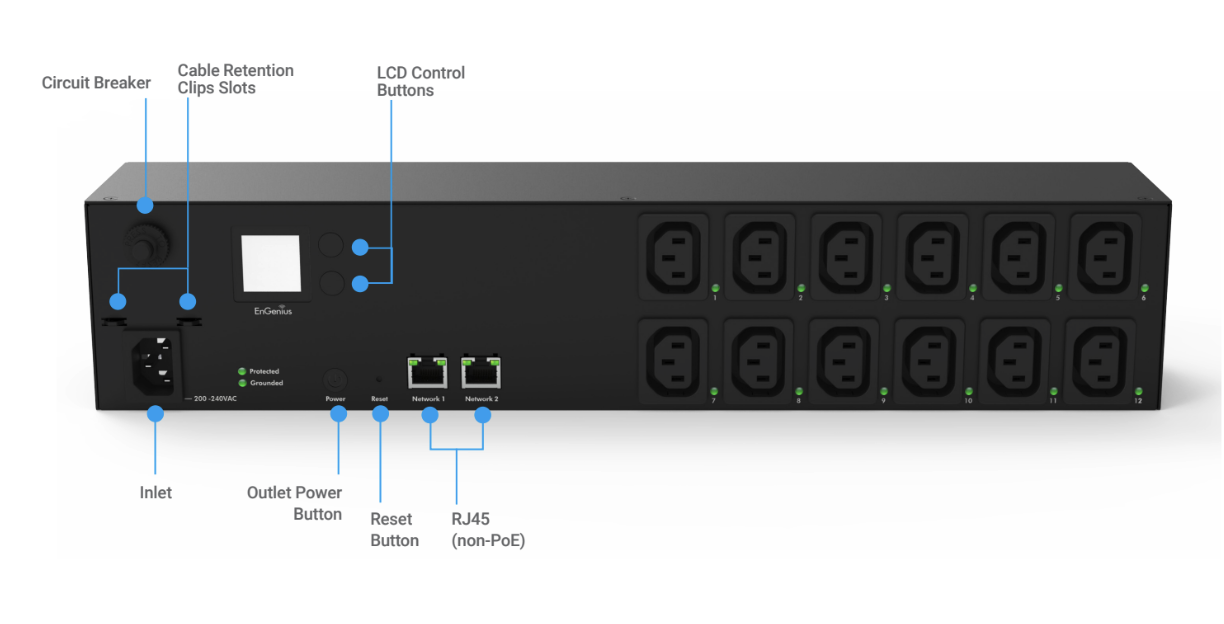
### Ports
{% hint style="info" %} **Reset to default**:
1. Press and hold the reset button for at least 15 seconds. Holding it for less than 15 seconds will only trigger a reboot. The system will restart automatically without any noticeable indication.
2. To initiate a factory reset, navigate to the LCD menu and select the "Factory reset" option. The screen will then indicate the resetting process with a progress bar.
{% endhint %}
### LEDs
## Safety Precautions
Read the following before installing or operating the Power Distribution Units (PDU)
* Use only the supplied hardware to attach the mounting brackets.
* Intended to be used in a location having equipotential bonding (such as a telecommunication center, a dedicated computer room
* Installation instructions that require verification of the PROTECTIVE EARTHING connection of the socket-outlet by a SKILLED PERSON
* Do not use extension cords or adapters with this PDU
* Never install a PDU or associated wiring or equipment during a lightning storm
* Ensure that the power cord, plug, and socket are in good condition
## Hardware Installation
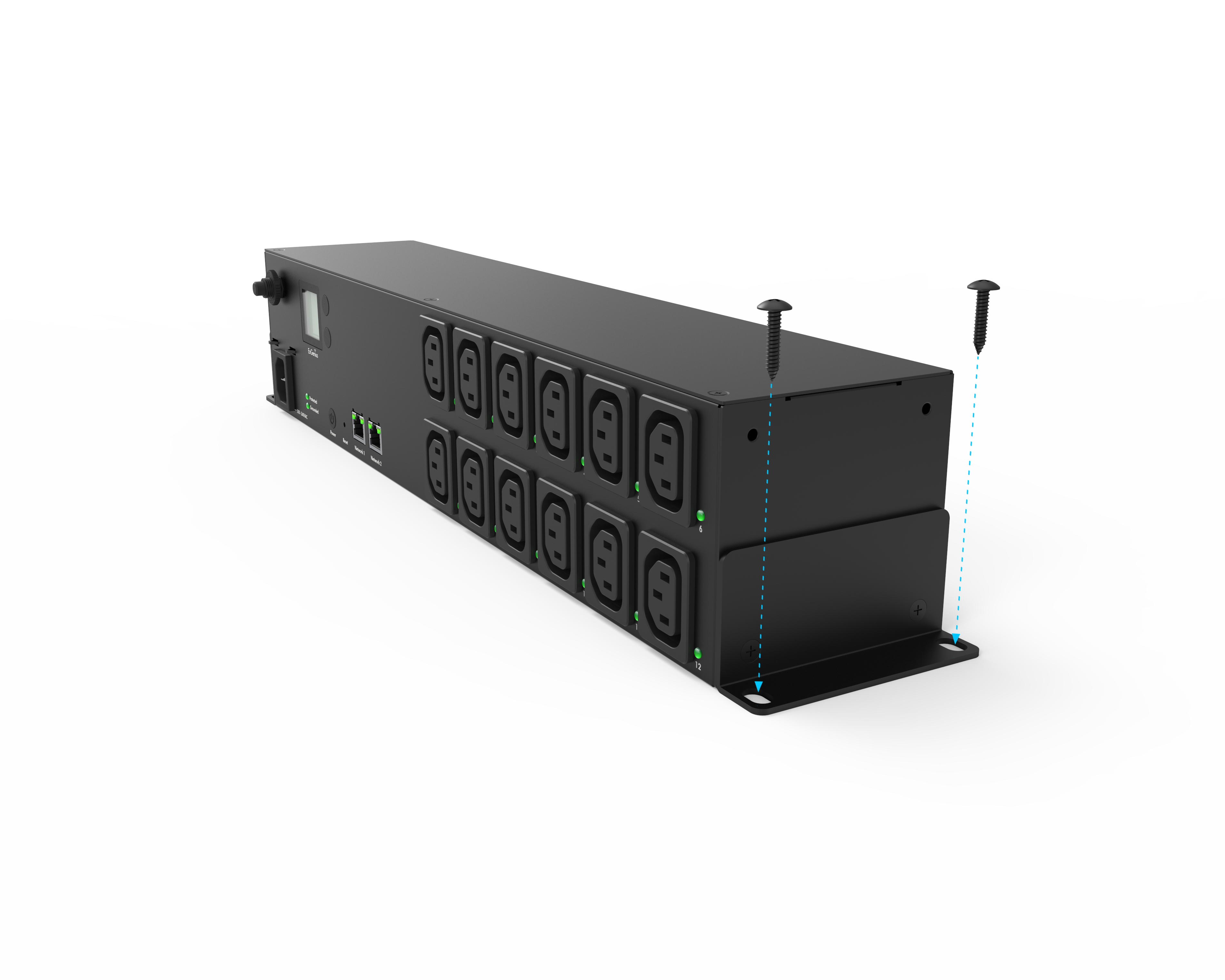
### Place on a Flat Surface in Computer Room
Suitable for installation in Information Technology Rooms in accordance with Article 645 of the National Electrical Code and NFPA 75. (Marking or Instruction)\
The PDU can be secured using the screws and rack ears included in the accessory kit
Peut être installé dans des salles de matériel de traitement de l’information conformément à l’article 645 du National Electrical Code et à la NFPA 75 (Marking or Instruction)
Step 1: Attach the **Rubber Footpads** to the bottom corners of the PDU. The **Rubber Footpads** help secure the PDU and protect it from vibration and shock when stacked.
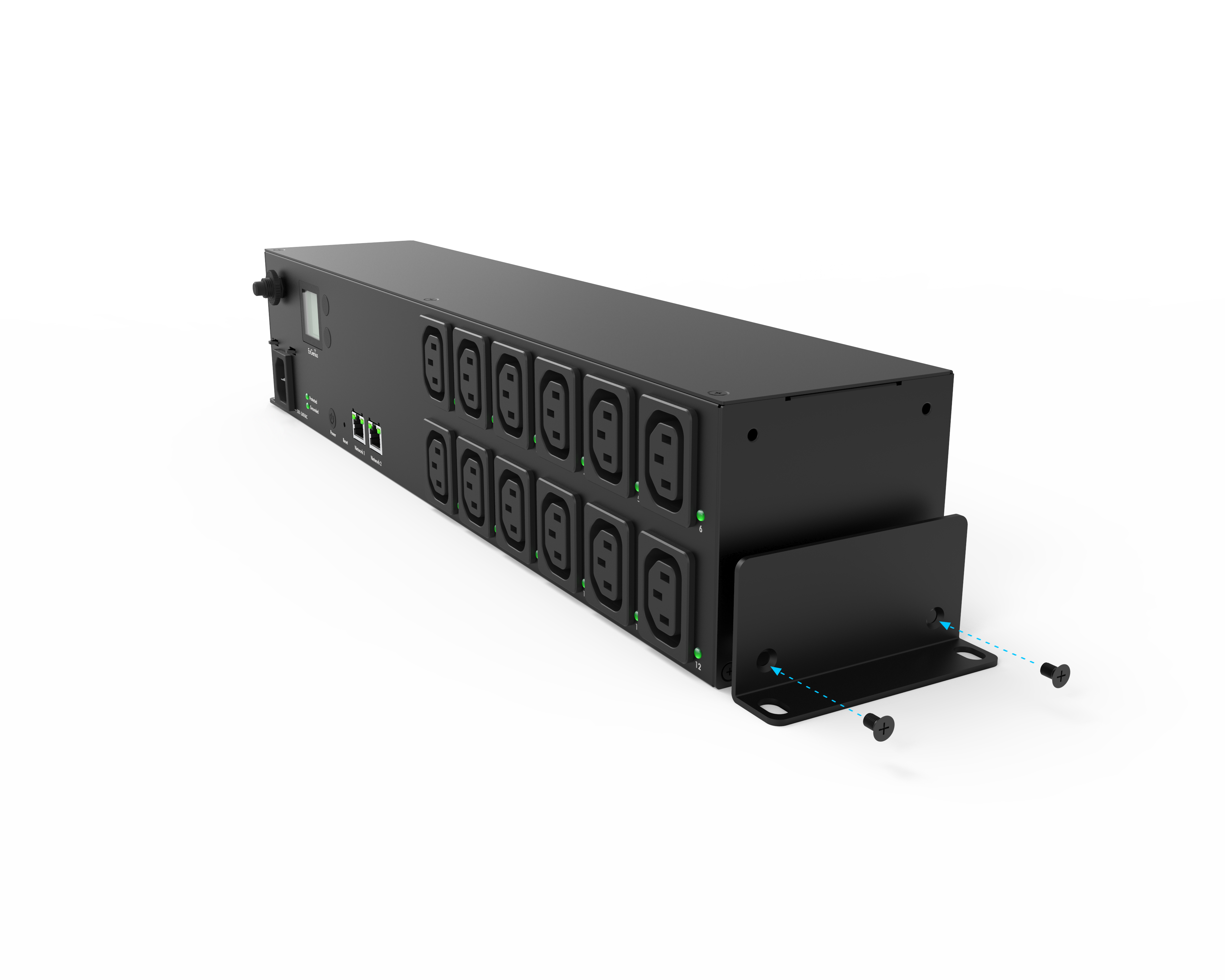
Step 2: Use 8(M4 x 6) screws to attach the rack ears to both sides of the device. This will allow you to position the PDU on any flat surface.
Use Provided 8(M4 x6) Bracket Mounting Screws
Step 3: Attach the bracket with 4(T4x19) to secure the PDU firmly to the flat surface.
Recommend using 4(T4x19) screws along with washers for securing.
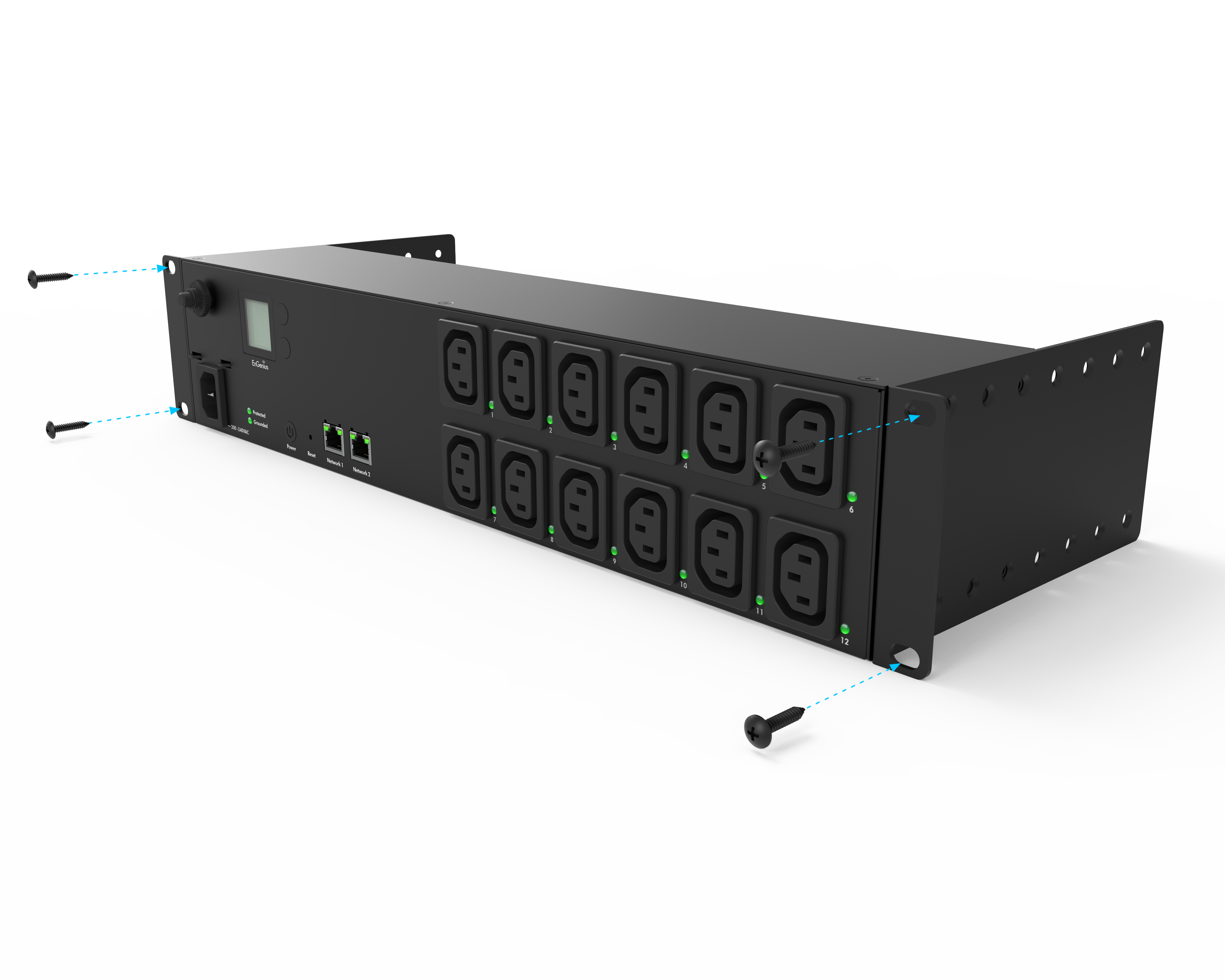
### Rack Mount
Securely attach the device with rack ears onto the rack using screws. Make sure it is securely attached and not wobbling.
(Due to different rack specifications, we have not included rack mounting screws. We recommend using M5 x 12 screws along with washers for securing.)
Recommend using M5 x 12 screws along with washers for securing.
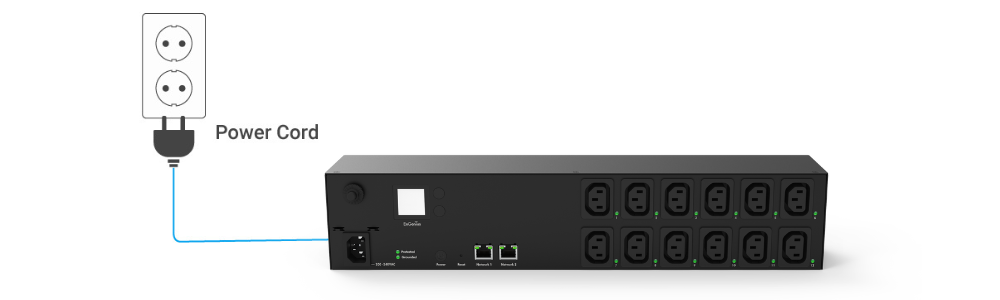
### Power On Device
Connect the **Power cord** to the front of the PDU, and then plug it into the power outlet.
## Management Plane
EnGenius Cloud To-Go provides flexibility to manage your devices based on your network planning and deployment.
Option A: **Cloud Management**
Option B: **Standalone Configuration**
### **Cloud Management**
Manage and monitor the PDU through the **EnGenius Cloud To-Go** with a mobile app or through the web portal.
**EnGenius Cloud To-Go** (iOS/Android)
:arrow\_down: [Download the Cloud To-Go mobile app here](https://apps.apple.com/us/app/engenius-cloud-to-go/id1212696440)
### **Standalone Configuration**
You can locate the computer, connect to the same network (subnet) as the PDU and use the web browser to access the device's local web GUI page for configurations whenever the device is in **Standalone mode.**
## Option A: Configure with EnGenius Cloud
### **Step 1: Connecting to Ethernet**
Connect the Ethernet cable from the EnGenius Switch directly to the DHCP-enabled network and make sure the PDU can reach the Internet.
### Step2: Register Device
You can register the device either by **Cloud To-Go** **mobile app** or the **EnGenius Cloud platform**.
#### **Cloud To-Go** Mobile App
1. Open and log in to the **EnGenius Cloud To-Go** mobile app.
2. Scan the QR code on the back of the device via the app.
Scan to Register
3\. If the camera successfully scans a QR code, the app will display the Device Information. You could tap "**Register**" to complete the Registration.
4\. Registered devices will be shown on the ***Inventory & License*** page. Upon sliding left the device, you can click "**Add to Network**" to add the device to your designated Network.

{% hint style="info" %}
**Network**: Management domain shared same configurations within EnGenius Cloud**.**
{% endhint %}
#### EnGenius Cloud Platform
1. Log into the **EnGenius Cloud Platform**: .
2. Go to the ***home > Inventory*** page and click "**Register Device**".
3. Enter the **Serial Number** of the device(s) for device registration. Please refer to "[User Manual-Registering Devices to Organization](https://docs.engenius.ai/home/cloud-user-manual/getting-started/device-onboarding)".

4\. Select the registered device and click "**Assign to Network**" to add the device to your designated Network.
{% hint style="info" %} **Network**: Management domain shared same configurations within EnGenius Cloud**.**
{% endhint %}
### Troubleshooting
If your PDU device cannot be managed by the EnGenius Cloud Platform, there might be a problem with connecting to EnGenius Cloud.
To troubleshoot the connection issue, you may log in to the **PDU Local Web** (optionB) page:
1. Make sure that your host system has same layer-2 network as the PUD. By default, the computer should get the IP address in this segment 192.168.10.x.
2. Under your web browser, enter the URL: **** to access the PDU's local status page web interface.
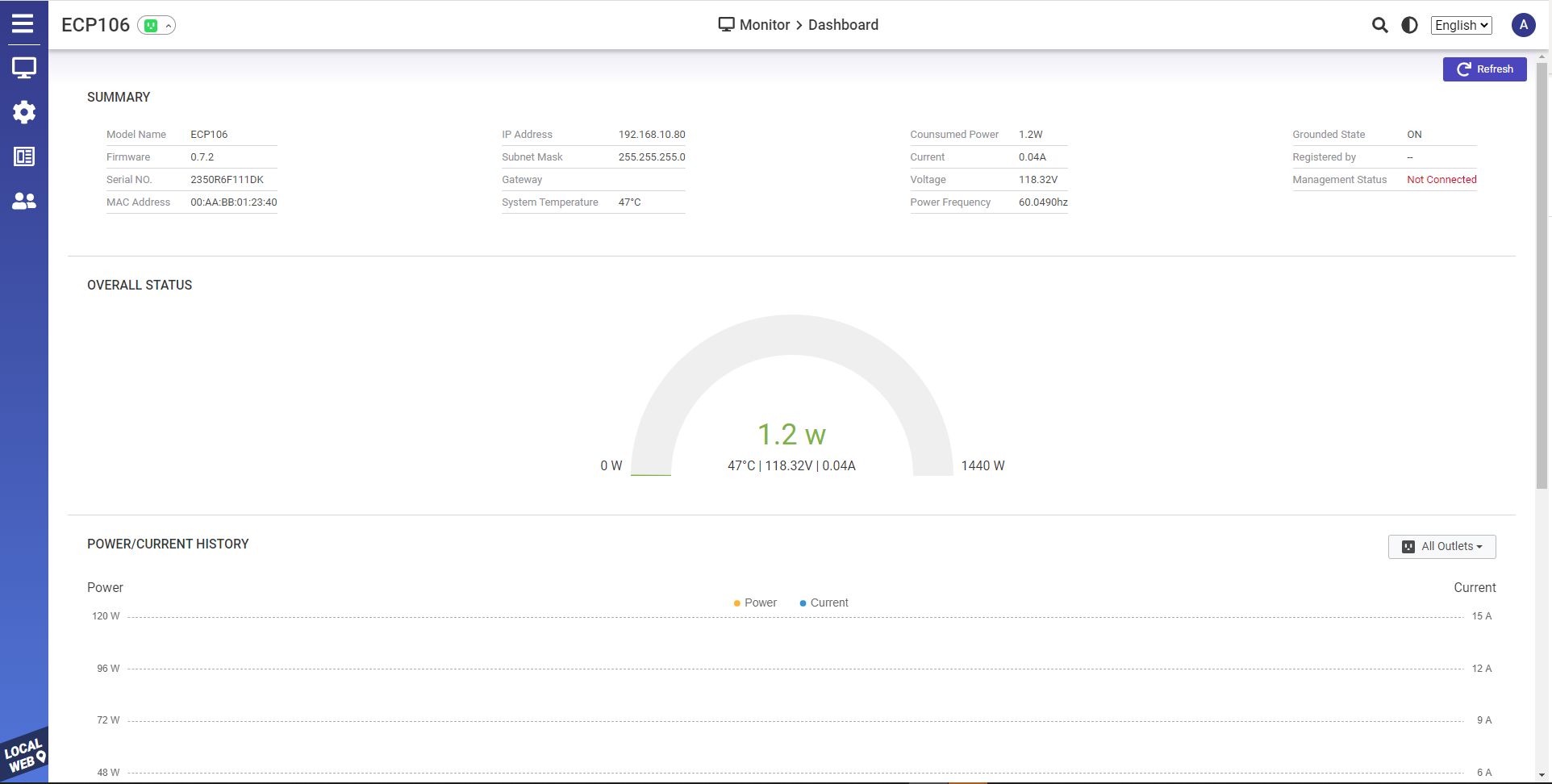
3. You can review the device status after logging into the PDU with the default admin account/password (admin/admin).
## **Option B: Standalone Configuration**
### Step 1: Access to Local Web
1. Connect your computer to the PDU and ensure its IP address is in the same subnet.
2. Launch your web browser and enter the URL: **** to access the PDU's local web GUI.
3. Use the default login credential (ID/PWD: **admin/admin**) to log in to the PDU's local web page.\
### Step2: Configure and Manage the Device
After logging in to the device's local web page, navigate to the left-side menu to configure and manage the PDU accordingly.
---
# Agent Instructions
This documentation is published with GitBook. GitBook is the documentation platform designed so that both humans and AI agents can read, navigate, and reason over technical content effectively. Learn more at gitbook.com.
## Querying This Documentation
If you need additional information that is not directly available in this page, you can query the documentation by asking a question.
Perform an HTTP GET request on the following URL with the `ask` and `goal` query parameters:
```
GET https://doc.engenius.ai/home-engenius-qsg-library/engenius-cloud-qsg/cloud-pdu/ecp212-int.md?ask=&goal=
```
`ask` is the immediate question: it should be specific, self-contained, and written in natural language.
`goal` is what the user is ultimately trying to achieve, the reason they need the answer. Sharing it helps GitBook give you a better, more relevant answer. A goal is most helpful when it describes the outcome the user wants rather than restating the question. For example, with `ask=how do I create an API token`, a goal like `automate deployments from our CI pipeline` lets GitBook tailor the answer to that use case.
The response will contain a direct answer to the question and relevant excerpts and sources from the documentation.
Use this mechanism when the answer is not explicitly present in the current page, you need clarification or additional context, or you want to retrieve related documentation sections.